How to Modernize Legacy Software Without Shutting Everything Down
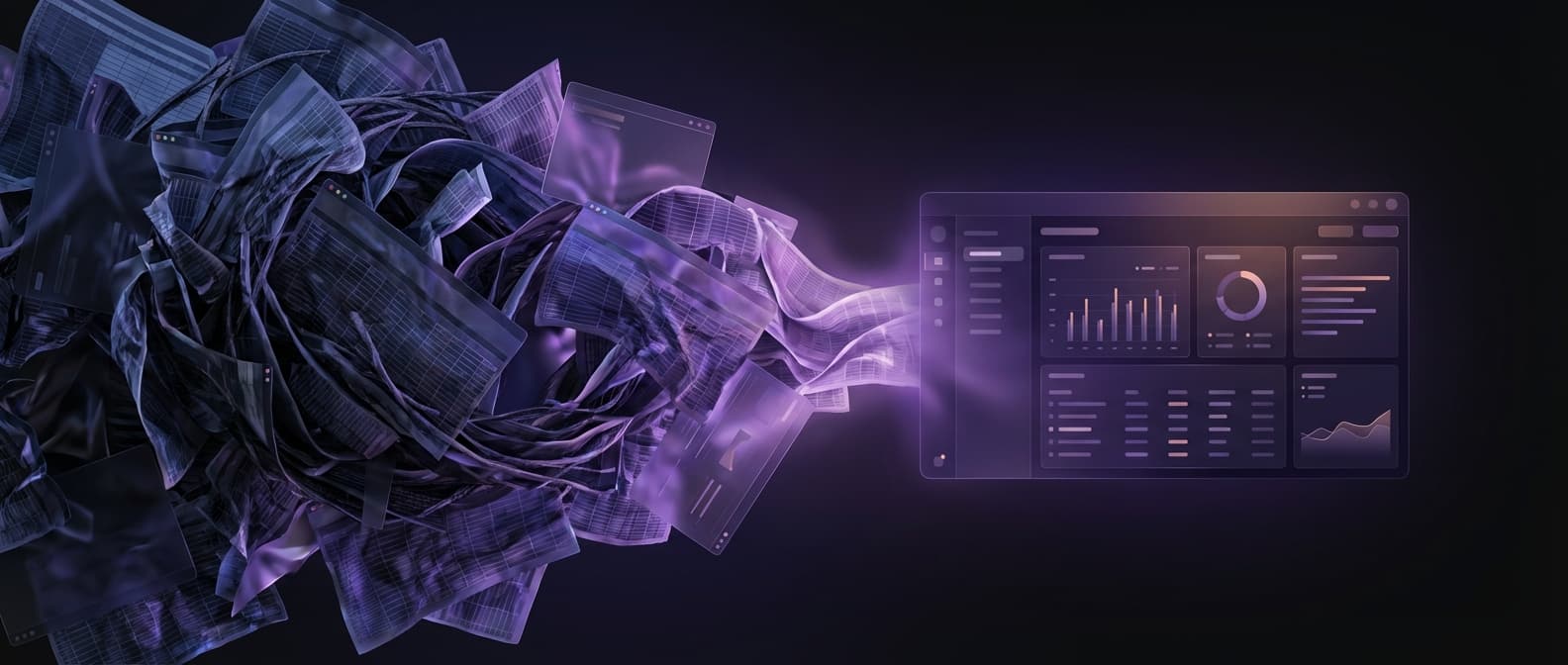
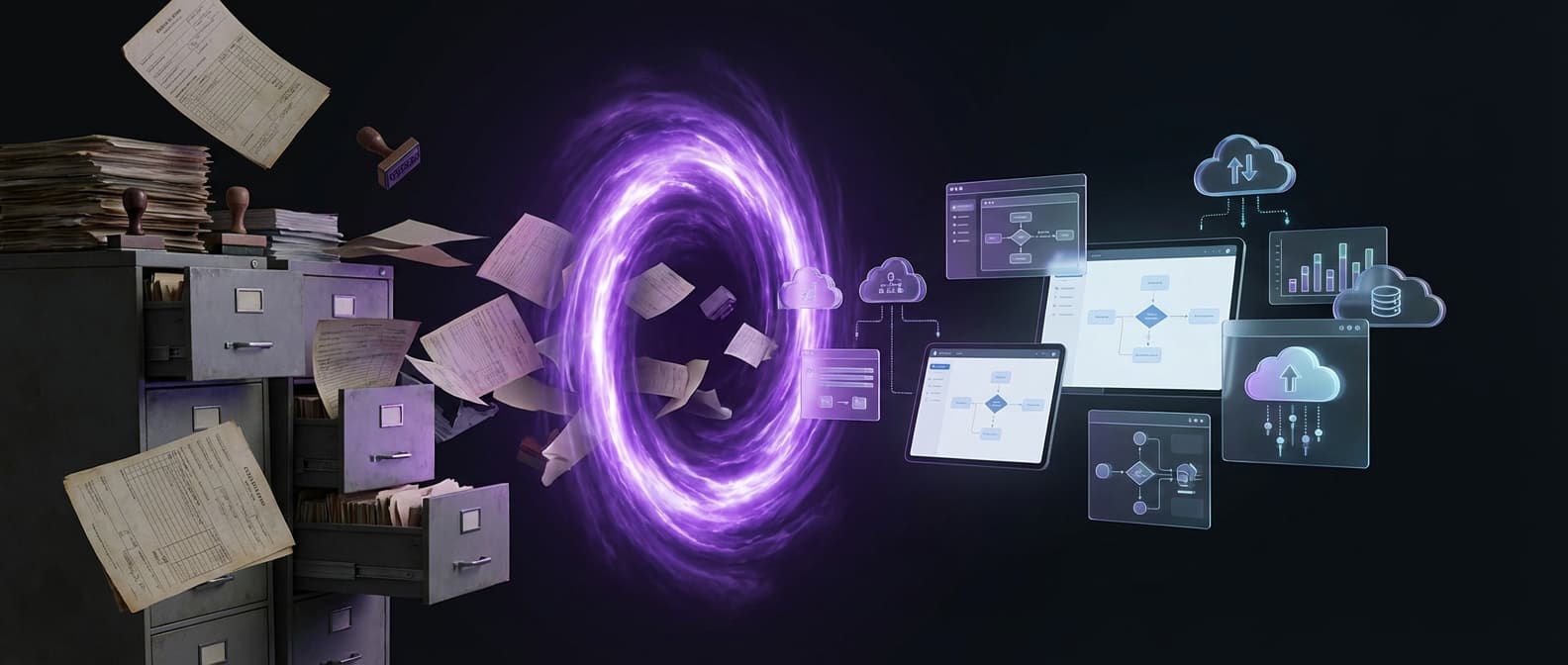
Every company with software older than five years faces the same dilemma. The legacy system works. It handles transactions, stores critical data, and supports daily operations. It is also slow, fragile, impossible to update safely, and the only person who fully understands it is considering retirement. The temptation is to scrap everything and build fresh. Do not do this.
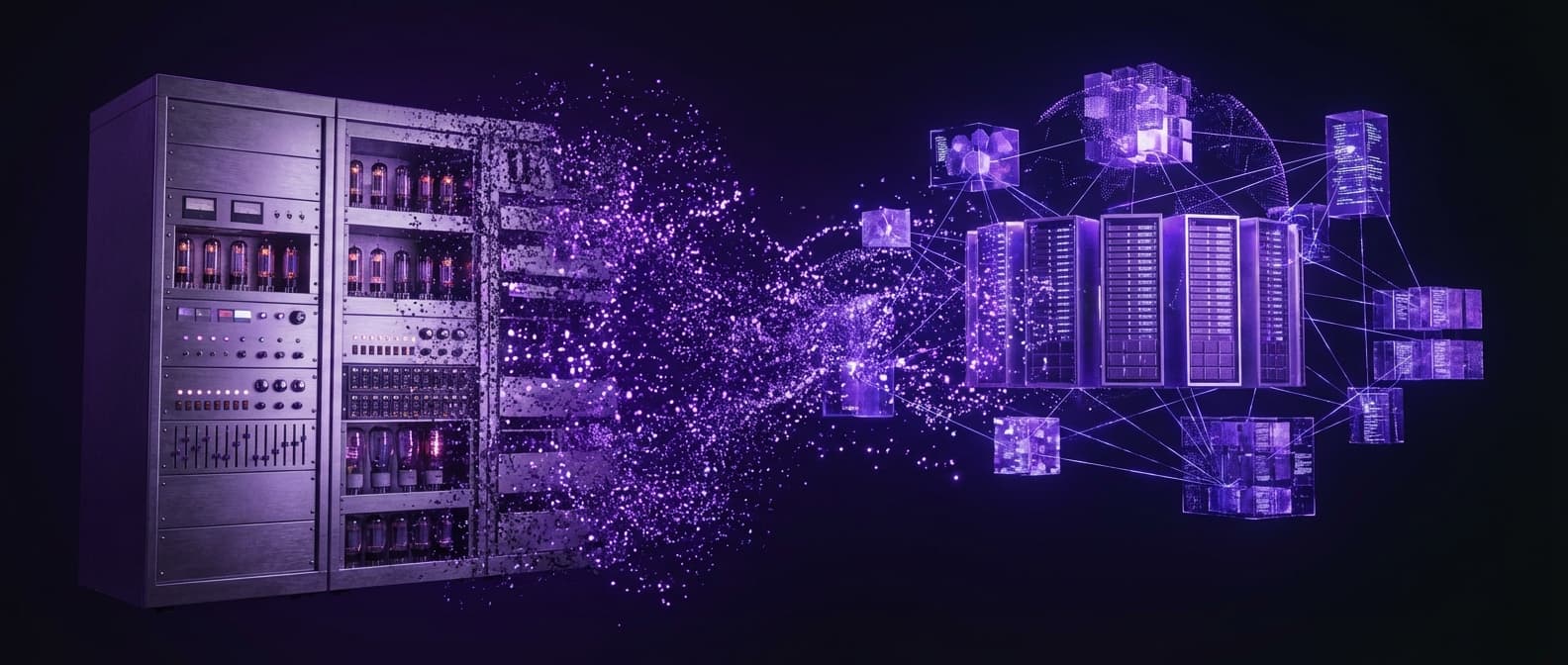
The full-rewrite approach has a dismal track record. Netscape's complete rewrite in the early 2000s took three years and nearly killed the company. A 2024 survey by Cast Software found that 62% of full legacy rewrites exceeded their original budget by more than 50%, and 28% were abandoned before completion. The alternative is incremental modernization - replacing parts of the old system one at a time while it continues to run.
The Strangler Fig Pattern - Explained Simply
The name comes from a tropical plant that grows around an existing tree, gradually replacing it until the original tree is gone and only the new growth remains. In software, this means building new services around the edges of your legacy system, routing traffic to the new services one feature at a time, and eventually decommissioning the old system when nothing depends on it anymore.
Here is how it works in practice. You place a routing layer (often an API gateway or reverse proxy) in front of your legacy system. All requests pass through this layer. Initially, 100% of requests go to the old system. As you build new services, you redirect specific routes to the new code. The old system does not know anything changed. Users do not know anything changed. But slowly, the new system handles more and more of the workload.
- Deploy a routing layer in front of the legacy system
- Identify a self-contained feature or module to modernize first
- Build the replacement as an independent service with its own database
- Route traffic for that feature to the new service
- Verify everything works, then move to the next feature
- Repeat until the legacy system handles nothing and can be shut down
Choosing What to Modernize First
The order matters enormously. Picking the wrong starting point can turn an incremental project into a stalled one. We recommend scoring each module on three factors.
- Business impact - how much does this module affect revenue, customer satisfaction, or team productivity?
- Independence - how tightly coupled is this module to other parts of the system? Loosely coupled modules are far easier to extract
- Change frequency - modules that need frequent updates are more painful to maintain in the legacy codebase and benefit most from modernization
The ideal first target is a module that ranks high on all three: important to the business, relatively independent from other modules, and frequently updated. In our experience, authentication systems, reporting dashboards, and customer-facing portals are often the best starting points because they sit at the edges of the system and have clear boundaries.
The Data Migration Challenge
Data is where legacy modernization gets truly complicated. Your old system has years of accumulated data, often in a schema that evolved organically - columns added haphazardly, nullable fields everywhere, business logic embedded in stored procedures, and relationships that exist only by convention rather than foreign keys.
There are two approaches to data migration during a strangler fig modernization. The first is a shared database - both old and new services read from and write to the same database. This is simpler initially but creates tight coupling and makes it hard to change the data model. The second is separate databases with synchronization - the new service has its own database, and a sync layer keeps both databases consistent during the transition period.
We almost always recommend the second approach despite the added complexity. A shared database means you are still constrained by the legacy schema, which defeats much of the purpose of modernization. With separate databases, you can design a clean schema for the new service and handle the data translation in a dedicated sync layer that can be removed once migration is complete.
Risk Management During Migration
The biggest risk in legacy modernization is not technical failure - it is business disruption. Your system is handling real transactions with real money. Downtime is not an option. Here are the safeguards we build into every migration project.
- Feature flags for instant rollback - if the new service fails, traffic routes back to the old system within seconds
- Parallel running with comparison - both old and new systems process requests simultaneously, and results are compared to catch discrepancies before users see them
- Staged traffic shifting - start with 5% of traffic to the new service, then 25%, then 50%, then 100%, monitoring error rates at each stage
- Comprehensive logging - every request through the routing layer is logged so you can debug issues with full context
- Clear rollback procedures documented before launch - everyone on the team knows exactly what to do if something breaks
Real Timeline Expectations
Anyone who promises to modernize a legacy system in three months is either working with a very small system or setting you up for disappointment. Realistic timelines depend on system complexity.
- Small system (single application, under 50K lines of code, 1-2 databases) - 6 to 9 months for full modernization
- Medium system (multiple applications, 50K-200K lines, 3-5 databases, external integrations) - 12 to 18 months
- Large system (enterprise-scale, 200K+ lines, complex data dependencies, regulatory requirements) - 18 to 36 months
These timelines assume a phased approach with production releases every 4-6 weeks. The goal is not to disappear for a year and emerge with a finished product. Each phase delivers measurable improvements - faster load times, new capabilities, reduced maintenance burden - so the business sees value throughout the process.
The Team You Need
Legacy modernization requires a specific skill set that is different from greenfield development. You need engineers who can read and understand unfamiliar codebases, often written in older languages or frameworks. You need database expertise for schema analysis and data migration. And critically, you need someone who understands the business logic embedded in the legacy code - because that logic was often never documented anywhere except in the code itself.
The most effective teams pair an external development partner (who brings modernization experience and fresh perspective) with internal subject matter experts (who know the business rules and edge cases). Neither group can do this well alone.
When Full Rewrite Is Actually the Right Call
Despite everything above, there are situations where incremental modernization is the wrong approach. If the legacy system is so poorly structured that no clear module boundaries exist, extraction becomes nearly impossible. If the data model is fundamentally incompatible with current business needs, a new schema is unavoidable. If the legacy technology stack has zero community support and no one can maintain it, keeping it running during migration becomes the bottleneck.
Even in these cases, we recommend building the new system in phases - deploying a minimal version first, migrating users gradually, and keeping the old system available as a fallback. A full rewrite does not have to mean a big bang launch. The strangler fig mindset applies even when the architecture demands starting fresh. The core principle is the same: never bet the business on a single cutover moment.